
Summer Schools

LIPHE4 Summer Schools are a reference point for young and old researchers and students looking to broaden their epistemological horizons. They attract, foremost, individuals eager to learn about innovative approaches in the academic field of sustainability. Our summer schools offer a picture that is both critical and holistic as well as theoretical and practical. They show participants how to integrate quantitative methodologies that analyze and characterize complex systems and their evolution with qualitative methodologies that help structure the decision process in a social context. Both lectures and hands-on case studies form an integral part of our programs.
We’ve run a dozen full schools since 2003 with each episode boasting the participation of a diverse set of international scholars. In addition, we’ve (co)organized several specialized courses and hybrid information days on the applications of advanced accounting frameworks tailored towards the exploration of the nexus between land use, energy, food, water and population dynamics. We accept solicitations to run or co-host summer schools, assuming the reasonable possibility of guaranteeing a minimum viable number of participants. Website visitors are also encouraged to contact us with requests to be added to a list of individuals we’ll alert when the next educational opportunity arises.
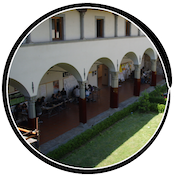
Florence, Italy
Our “The End of Certainty: Conversations on the Crisis of Science and Society” (Florence, 7–9 September 2026) session explored the implications of complexity and irreducible uncertainty for science, policy, and governance, with a focus on Post-Normal Science and the limits of modelling.

Grenoble, France
Our 2023 Winter School, “Sustainability Modeling of Complex Agroecological Systems: Challenges and Alternatives to Current Approaches”, 11–13 December 2023, examined the implications of complexity for sustainability modelling, with emphasis on relational analysis and the MuSIASEM framework as an alternative to reductionist approaches.
Barcelona, Spain
After a few short years of hiatus, school was back in session 10–14 July for Energy Transitions: Diagnosing wishful thinking and identifying critical vulnerabilities. Hosted again on the campus of the Autonomous University of Barcelona, the school focused on a critical exploration of the plausibilities and practicalities of a “green transition” in relation to energy security and climate concerns.
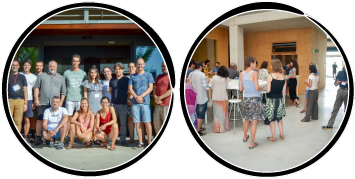
Barcelona, Spain
From 8–12 July we ran the summer school Complex Sustainability Challenges: The Nexus Between Water, Energy and Food at the Institute of Environmental Science and Technology (ICTA) of the Autonomous University of Barcelona. The course was co-hosted with the European Horizon2020 project Moving Towards Adaptive Governance in Complexity: Informing Nexus Security (MAGIC) and had the general purpose of familiarizing participants with the theory and applications of Multi-scale Integrated Analysis of Society and Ecosystem Metabolism (MuSIASEM) and Quantitative Story-Telling (QST), in particular the use of MuSIASEM to carry out relational analysis (nexus approach) of the metabolic pattern of social-ecological systems across different dimensions and scales of analysis in relation to complex sustainability problems.
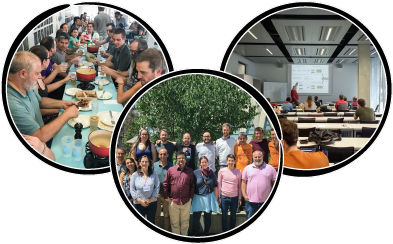
Geneva, Switzerland
Together with the ENVIROSPACE Lab of the University of Geneva, we co-ran the summer school Can Cities Be Sustainable? Novel tools to explore urban metabolism, which ran from 2–6 July. During the school, participants were guided through the use of novel tools useful for the analytical exploration of urban metabolism, with a focus on responsible accounting for water, energy, food and waste flows in relation to land uses and human activity, the construction of multi-level end-use matrices, relational analysis (nexus approach) applied to the metabolic pattern of urban systems, and the role of externalization in sustaining urban metabolism.
Naples, Italy
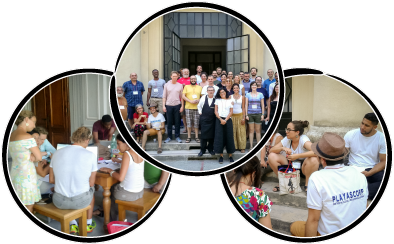
2017 brought us to Naples’ very own botanical garden to run, in collaboration with the Department of Biology of the University of Naples Federico II, the summer school A Critical Appraisal of Current Narratives of Sustainability through Quantitative Storytelling. The approximately two dozen professionals and students, hailing from half as many countries, were equipped during the course with the tools necessary to critically examine a selection of case studies referring to trendy narratives in the sustainability science discourse, including “circular economy”, “bio-economy”, “low-carbon economy”, “green growth” and “100% renewable energy cities”. The course ran from 10–14 July.
Barcelona, Spain
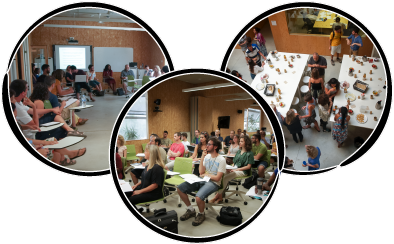
Our twelfth summer school, titled The Nexus between Food, Energy, Water and Land-use: Quantitative Storytelling with MuSIASEM, was run together with long-time collaborators—the Integrated Assessment: Sociology, Technology and the Environment (IASTE) research group. The event was held 10–14 July on site at the Institute of Environmental Science and Technology (ICTA) of the Autonomous University of Barcelona (UAB). During the course, the nearly three dozen enrollees were guided on a deep-dive exploration of “the discussion” in the field of sustainability—the implications of the existence of “limits” to perpetual growth. We teased one of the central questions for sustainability scientists—do we actually have the effective tools needed to carry out said discussion?
Quito, Ecuador
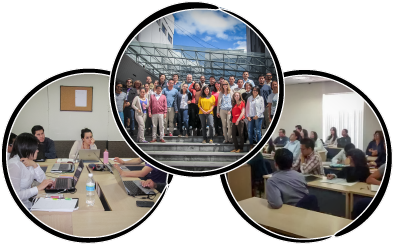
From 13–24 July we ran a summer school for 30+ professionals, titled Análisis del Nexo Entre el Uso del Suelo, el Agua, la Energía, los Alimentos, y la Población para el Diseño de Políticas Pública, based at the Instituto de Altos Estudios Nacionales (IAEN) in Quito, Ecuador. The school focused on demonstrating the need for a nexus analysis between land use, water, energy, food production and its relationship with population dynamics, providing the basis of the Multi-scale Integrated Analysis of Societal and Ecosystem Metabolism (MuSIASEM) approach to carrying out this type of analysis, and applications of related knowledge to selected case studies to provide students with the tools needed to develop paradigm-shifting sustainable development proposals.
Terrassa, Spain
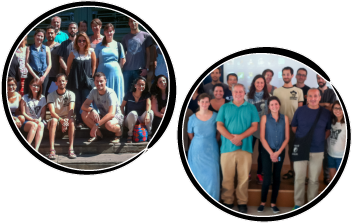
For our second session of 2014, held 8–10 September, we offered an intensive training course on the theory and applications of Multi-scale Integrated Analysis of Societal and Ecosystem Metabolism (MuSIASEM), on location at the Escola d’Enginyeria in Terrassa, Spain. The event was organized in collaboration with the Institute of Environmental Science and Technology (ICTA) of the Autonomous University of Barcelona (UAB) as well as the Sustainability Measurement and Modeling Lab (SUMMLAB) and the UNESCO Chair in Sustainability (CUS) of the Polytechnic University of Catalonia (UPC). The primary aim of the course was simply to strengthen collaboration between the participating institutions.
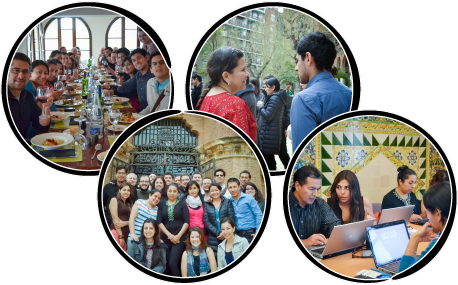
Barcelona, Spain
From 28 April–16 May, the Ecuadorian Secretariat for Planning and Development (SENPLADES) sent a team of sixteen experts to Barcelona to take part in an intensive training course in Multi-scale Integrated Analysis of Societal and Ecosystem Metabolism (MuSIASEM). We had the pleasure of hosting that team at the Casa de Convalescència of the Autonomous University of Barcelona (UAB), and of organizing all associated academic activities. The 2-week course was aimed at strengthening human and institutional capacities in designing and evaluating future development scenarios within the context of the Ecuador’s National Plan for Good Living.
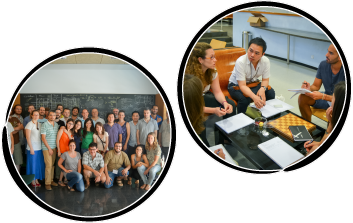
Barcelona, Spain
8–12 July marked our first confrontation with the challenge of the resource nexus. Under the title Developing Toolkits for Analyzing the Nexus between Land, Water, Food, Energy and Population Across Scales, we offered a one-week crash course familiarizing participants with the application of the Multi-Scale Integrated Analysis of Societal and Ecosystem Metabolism (MuSIASEM) approach to the analysis of the nexus between land, water, food, energy and environment across scales. The summer school took place on the Bellaterra campus of the Autonomous University of Barcelona (UAB).
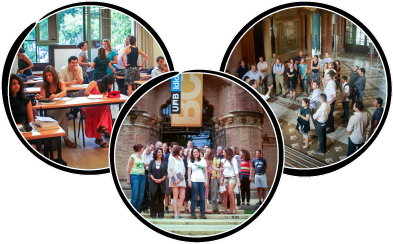
Barcelona, Spain
From 17–21 September we ran the summer school Multi-Scale Integrated Analysis of Societal and Ecosystem Metabolism (MuSIASEM): An innovative approach to energy analysis. For the event, we brought in our finest energy analysts to demonstrate the broad value propositions of MuSIASEM for the generation of robust energy scenarios and the assessment of the quality of alternative energy sources. The one-week school was hosted by the Autonomous University of Barcelona (UAB) at its beautiful Casa de Convalescència, one of the last great works of Catalan Modernism, located in downtown Barcelona.
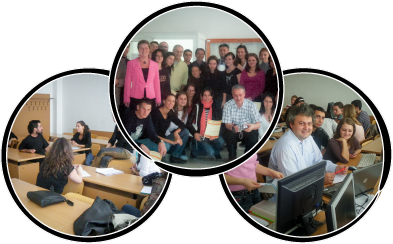
Timisoara, Romania
Following on the heels of our July episode, we ran a fall school 13–17 October in Romania, organized in collaboration with West University of Timisoara (Romania), the National Institute for Economic Research of the Romanian Academy in Bucharest (Romania) and the University of Auvergne Clermont-Ferrand 1 (France). The immediate goal of the event was to reach a critical mass of domain researchers at the West University of Timisoara (UVT). A focal purpose was given to developing a better understanding of environmental protection features through state-of-the-art transdisciplinary research. The school was hosted by the “Nicholas Geogescu-Roegen” Interdisciplinary Formation and Research Platform of UVT.
Barcelona, Spain
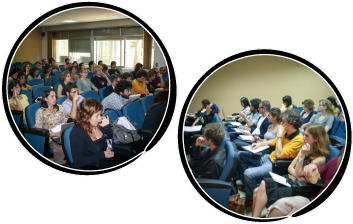
2008 marked the first time we ran a school focused specifically on, as the event was titled, the Multi-Scale Integrated Analysis of Societal and Ecological Metabolism (MuSIASEM) for Participatory Assessment of Sustainability Issues. Our central purpose was to introduce course participants to the theory and practical applications of MuSIASEM, making sure to cover the relevant set of important conceptual building blocks derived from complex systems thinking. The school also experimented with an “epistemological therapy” session, given at the onset of the course as performed by scientific board members Silvio Funtowicz and Roger Strand. The experiment was such a top success, it’s become a tradition in nearly all summers school held since. The course ran from 14–18 July and was hosted by the Institute of Environmental Science and Technology (ICTA) of the Autonomous University of Barcelona (UAB), Spain.
Khon Kaen, Thailand
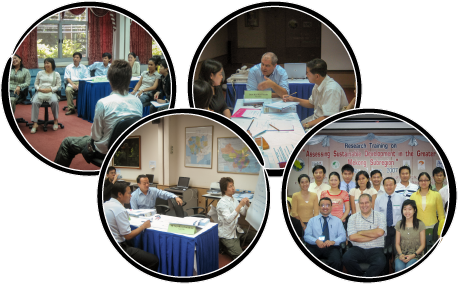
From 21 May–1 June we co-ran the summer research training program Assessing Sustainable Development in the Greater Mekong Sub-region (GMS), co-organized with the Mekong Institute (MI) in partnership with the National University of Laos, Asian Institute of Technology (Thailand) and Wakayama University (Japan). During the course, participants addressed research issues such as the integrated assessment of community-based tourism (quality tourism), rural development and the issue of water, rural development within a changing economy, and development options for organic agriculture. The research course was sponsored by the Asia Pacific Network for Global Change Research (APN) and drew participants from all over Asia.
Murcia, Spain
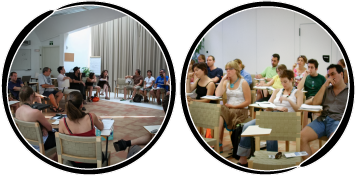
The third edition of our summer school ran from 16–22 July. It remained faithful to the success formula of the two earlier editions. Gathering again in Murcia, Spain, the course drew a large number of students and practitioners from various sustainability-related disciplines. The course was made possible thanks to the renewed financial support of the Obra Social of the Caja de Ahorros del Mediterraneo (CAM) and was hosted by Centro de Educación del Medio Ambiente (CEMACAM) in Torre Guil, Murcia, Spain.
Murcia, Spain
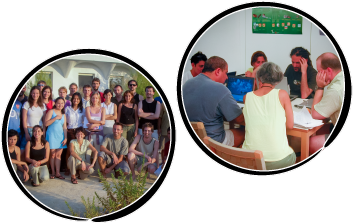
From 17–23 July, we ran the second edition of the summer school, titled Developing Toolkits on Integrated and Participatory Analyses of Sustainability. The primary aim was to expose and explain the potentialities of novel methodologies for analyzing concrete sustainability scenarios from a transdisciplinary perspective, using a case-study approach. The event took place in Murcia, Spain, again in collaboration with the Institute of Social Ecology, University of Klagenfurt (AAU), Vienna. The course counted on the financial support of the Obra Social of Caja de Ahorros del Mediterraneo (CAM) and the collaboration of Centro de Educación del Medio Ambiente (CEMACAM) in Torre Guil, Murcia, Spain.
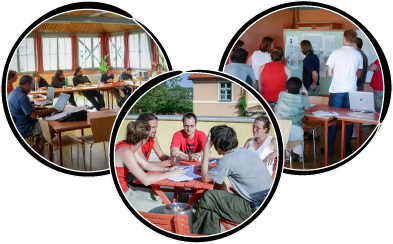
Deutschlandsberg, Austria
In 2004, we launched our first summer school in collaboration with the Faculty for Interdisciplinary Studies (IFF) of the University of Klagenfurt (AAU), Austria, together with the support of the Austrian Federal Ministry of Agriculture, Forestry, Environment and Water Management. The course ran from 20–27 August in Deutschlandsberg, Austria. At it, we introduced novel approaches emerging in the field of sustainability science, such as integrated biophysical assessment, social multi-criteria evaluation, various participatory approaches and novel methods of spatial analysis. The summer school attracted a diverse group of graduate students and young professionals from all over the world. The heterogeneity of the group proved a major asset in stimulating discussions and exploring new transdisciplinary solutions to sustainability problems, immediately setting a high bar precedent for future summer school editions.